The last procedure is finished. Patients have gone home. Your clinical team is wrapping up.
Terminal cleaning is scheduled. And you should be able to leave knowing it will be completed correctly.
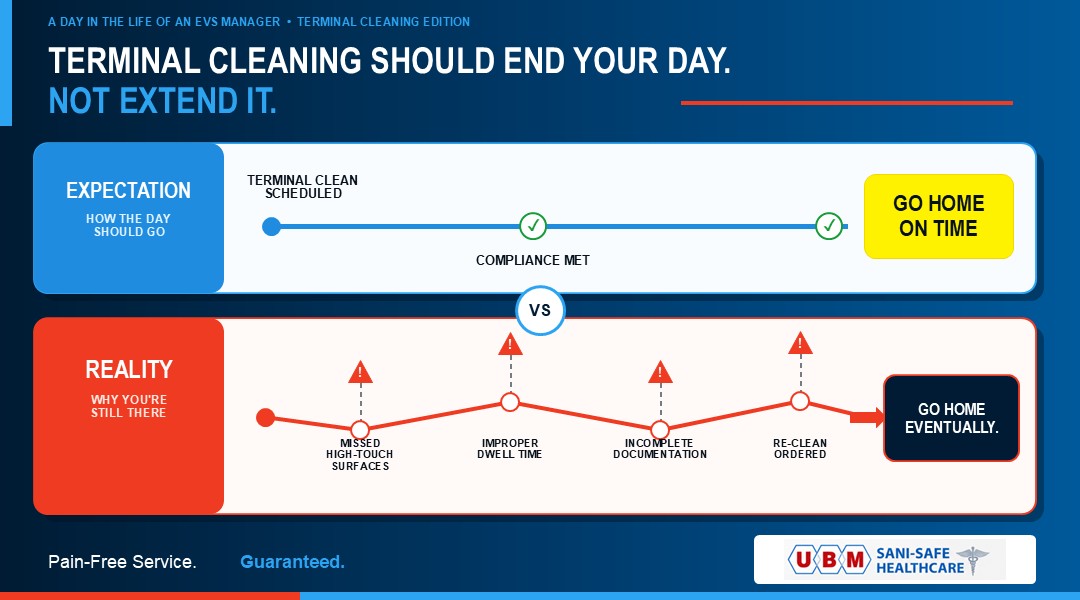
Instead, you may still be there checking rooms, finding missed surfaces, tracking down documentation or requesting that part of the facility be cleaned again.
Terminal cleaning was supposed to complete your day.
Why does it keep extending it?
When Terminal Cleaning Becomes Another Management Job
Whether terminal cleaning falls under an EVS manager, administrator, Director of Nursing or infection preventionist, the expectation is simple:
The cleaning team follows the facility’s protocols, completes every required area and provides documentation that the work was performed.
But without a reliable system, the person responsible for the facility can become the system.
You may find yourself:
- Reminding the crew which high-touch surfaces must be addressed
- Checking whether disinfectants remained wet for the required contact time
- Searching for incomplete or missing documentation
- Reporting the same problems over and over
- Ordering rooms or areas to be cleaned again
- Staying late to confirm the work was finally completed
The problem isn’t simply an inconvenient cleaning issue.
It is a breakdown in process, training and accountability.
The Four Problems That Keep Managers There Late
01 | Missed High-Touch Surfaces
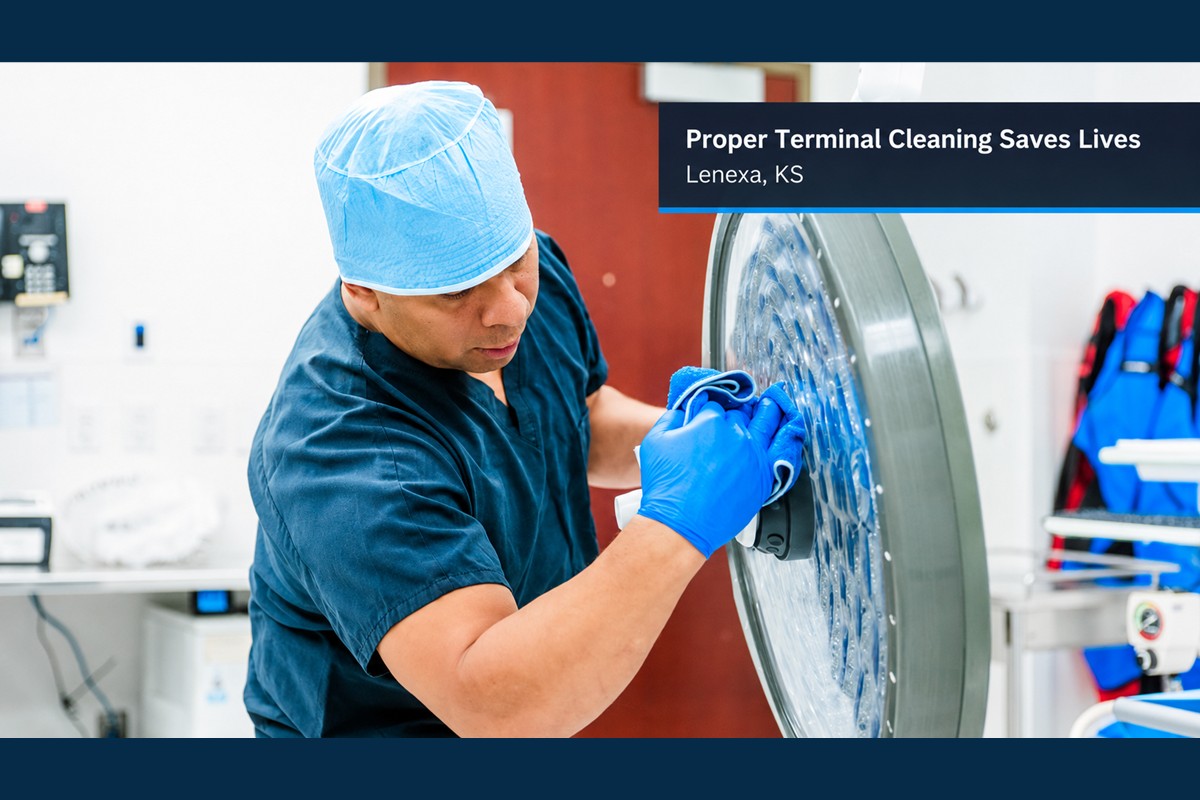
Door handles, light switches, procedure tables, control panels and other frequently touched surfaces can easily be overlooked when responsibilities are unclear.
The CDC recommends identifying high-touch surfaces for each patient-care area and including them in cleaning checklists and job aids.
That matters because “everyone knows what to clean” is not a dependable terminal cleaning system.
The scope must be clearly defined.
02 | Improper Disinfectant Contact Time
Applying disinfectant and immediately wiping it away may not allow the product to work as intended.
The surface must remain wet for the full contact (or dwell) time listed on the product label. CDC guidance also emphasizes following the manufacturer’s instructions for dilution, contact time, safe use and material compatibility.
This requires more than purchasing the right product. It requires training employees to use it correctly every time.
03 | Incomplete Documentation
A cleaning checklist is not busy work.
It helps establish what was cleaned, when it was completed and who performed the work. It also gives managers a way to identify recurring gaps before those gaps become larger problems.
If cleaning was performed but no reliable record exists, proving that the established process was followed becomes much more difficult.
04 | Re-Cleans and Repeated Corrections
Every missed task creates another task for someone else.
A room must be inspected again. A supervisor must be contacted. Employees may need to return. The correction must be verified.
That takes time away from clinical operations, staff management and preparation for the following day.
The real cost of an unreliable terminal cleaning program isn’t limited to cleaning labor. It includes the time your own team spends managing the cleaning company.
Does Everyone Know Who Owns the Clean?
One of the most common weaknesses in healthcare environmental cleaning is uncertainty about responsibilities.
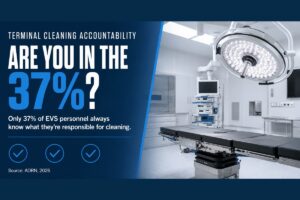
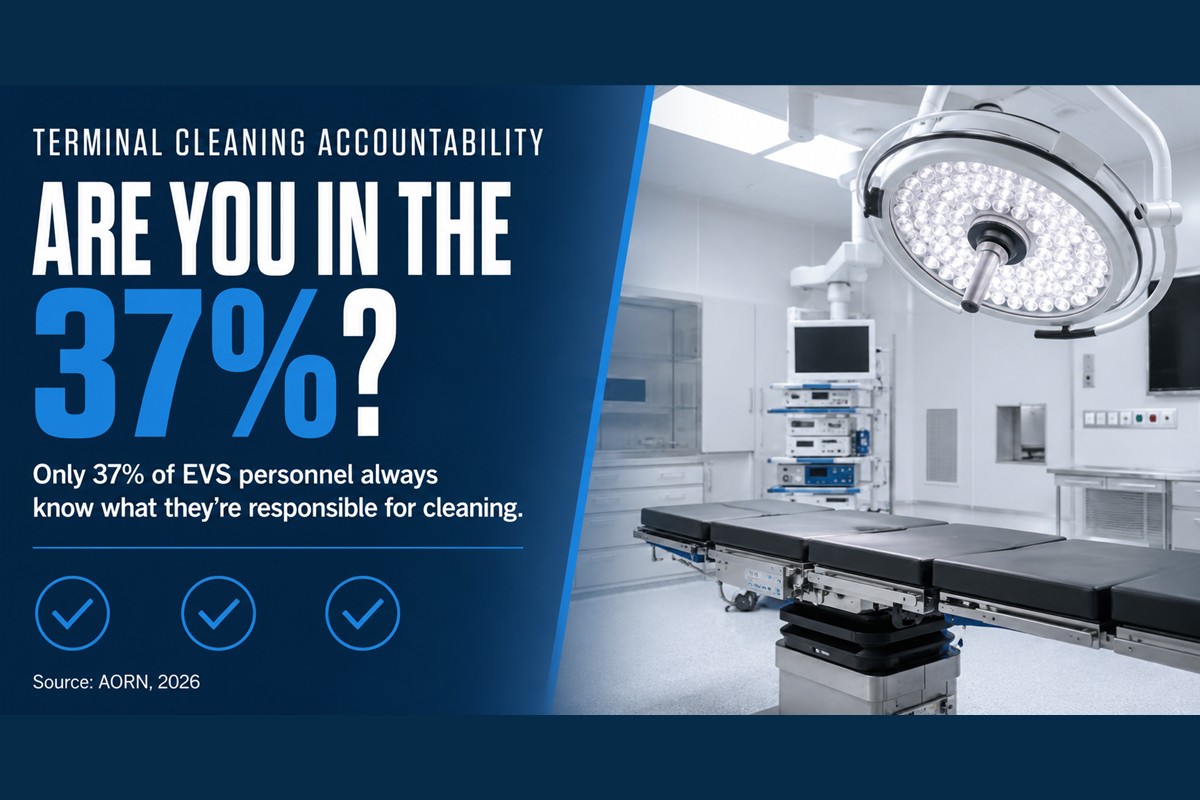
AORN recently highlighted research finding that only 37% of environmental services personnel always knew what they were responsible for cleaning. When responsibilities are unclear, team members may assume someone else cleaned equipment controls, IV poles or other important surfaces.
A dependable terminal cleaning program removes that uncertainty.
Before work begins, everyone should understand:
- Which areas and surfaces are included
- Who is responsible for each task
- Which products and procedures must be used
- How completion will be documented
- Who verifies quality
- What happens when a problem is discovered
What Terminal Cleaning Should Look Like
A well-managed terminal cleaning program should operate consistently – even when the person responsible for the facility is not standing there watching.
What this looks like:
Healthcare-Specific Training
- Cleaning personnel must understand that terminal cleaning is different from ordinary commercial/janitorial cleaning. They need training on high-touch surfaces, cleaning sequence, cross-contamination prevention, PPE, disinfectant preparation and required contact times.
A Clearly Defined Process
- Each employee should know exactly what is included in the terminal cleaning scope. Checklists and standardized procedures reduce the risk of steps being skipped or interpreted differently from one employee to another.
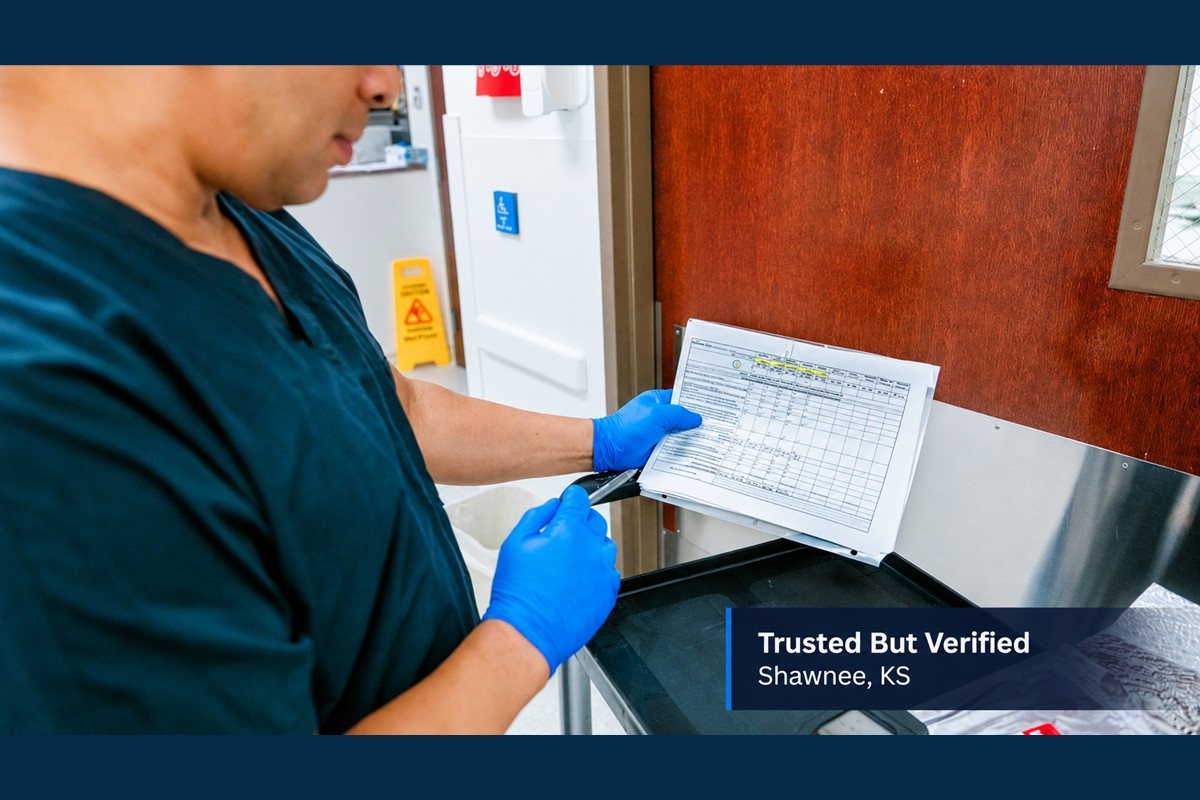
Documented Completion
- Documentation should be completed as part of the work, not reconstructed later because someone asks for it.
Active Quality Control
- Quality should be verified consistently, not only after a facility manager discovers a problem.
Clear Accountability
- When a concern arises, you should know who is responsible for correcting it. You should not have to call multiple people or repeatedly explain the same issue.
Stop Babysitting Your Terminal Cleaning Company
At Sani‑SAFE Healthcare, our terminal cleaning programs are designed specifically for healthcare environments.
Our structured system combines healthcare-focused training, clearly defined procedures, documented accountability and ongoing quality oversight to help reduce missed steps and end-of-day surprises.
Because your responsibility is to protect your facility and its patients.
It should not be to supervise the cleaning crew.
Terminal Cleaning Should Give You Confidence to Go Home
At the end of the day, you should be able to leave knowing:
- The required areas were cleaned
- High-touch surfaces were addressed
- Products were used according to established procedures
- Documentation was completed
- Problems will be identified and corrected
- Your facility is being prepared for the next day’s patients
If terminal cleaning is still extending your day, it may be time to evaluate the system behind the service.
Ready for Terminal Cleaning Without the Babysitting?
Schedule a complimentary terminal cleaning assessment with Sani‑SAFE Healthcare.
Kansas City’s ASC Terminal Cleaning Specialists
Pain-Free Service. Guaranteed.
We’ll help you identify gaps in your current program and determine what it would take to create a more consistent, documented and dependable terminal cleaning process.