What Are AORN Terminal Cleaning Guidelines?
AORN guidelines define how operating rooms should be cleaned and disinfected to reduce infection risk and maintain compliance.
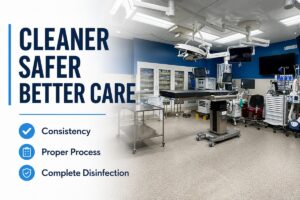
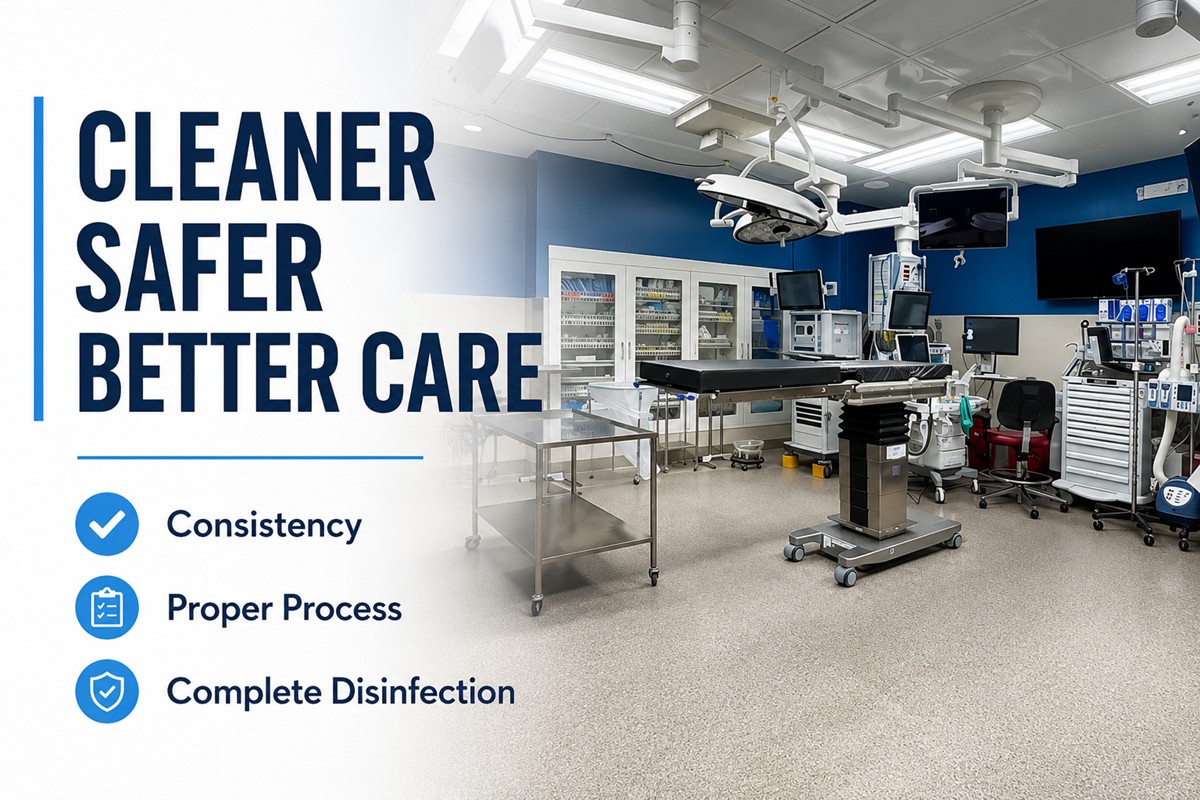
They focus on three things:
- Consistency
- Proper process
- Complete disinfection
Not just appearance.
What Terminal Cleaning Actually Requires
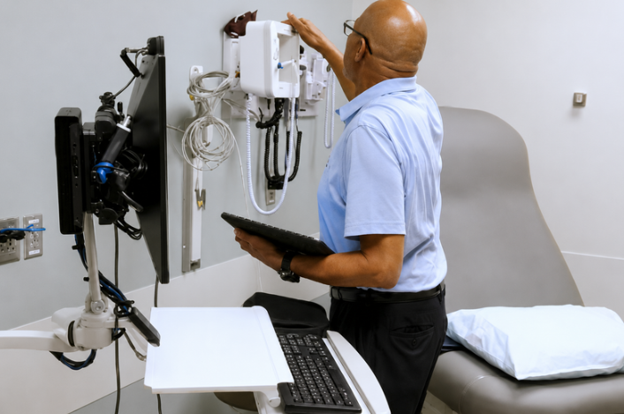
Terminal cleaning is not a surface wipe-down.
It includes:
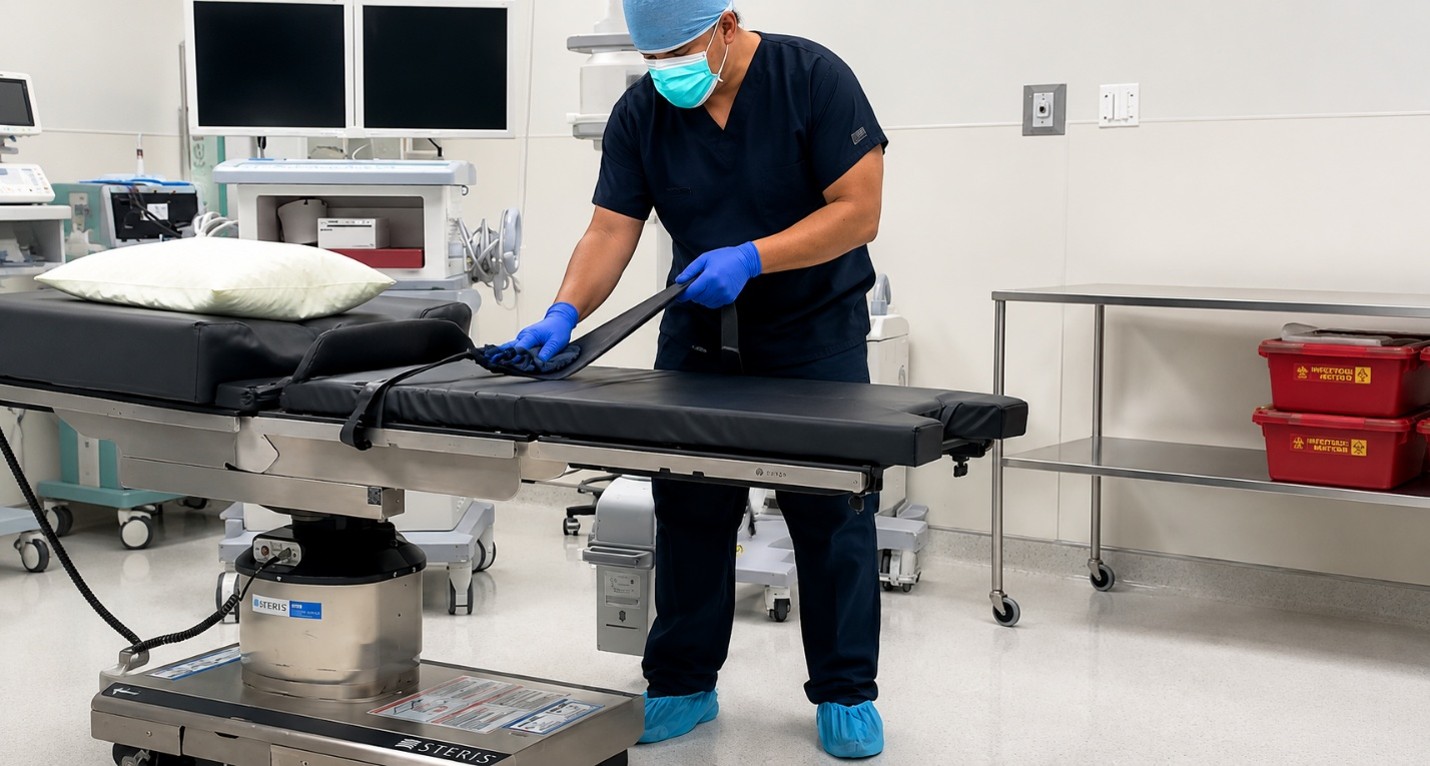
- All horizontal and vertical surfaces
- Surgical lights and equipment
- OR tables and attachments
- Walls, doors, and handles
- Floors (entire room, including under equipment)
AORN emphasizes that terminal cleaning is a thorough, daily process covering all exposed surfaces.
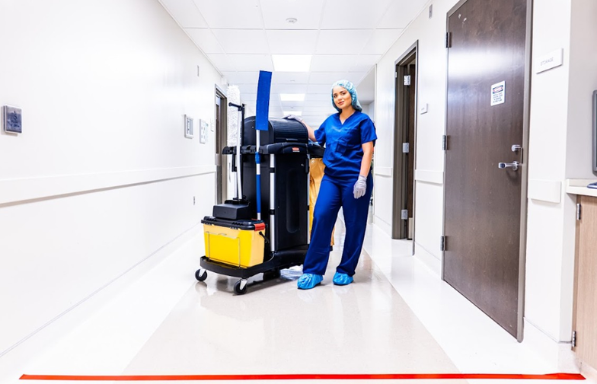
The Most Important Concept: Process and Sequence
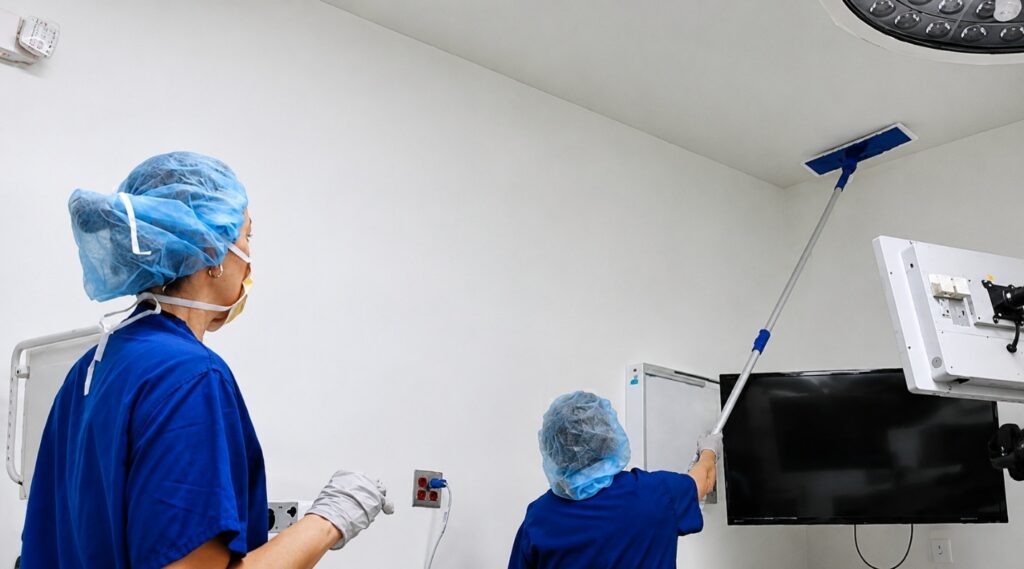
AORN focuses heavily on how cleaning is performed. Not just what is cleaned.
Key principles:
- Clean from high to low
- Clean from clean areas to dirty areas
- Follow a consistent sequence every time
- Preventing cross-contamination
Standardized steps improve effectiveness and reduce missed areas.
Dwell Time: The Most Common Failure Point
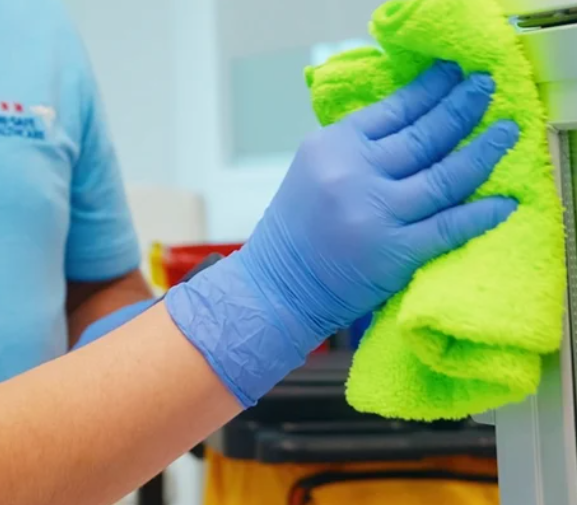
One of the biggest issues in healthcare cleaning is improper disinfectant use.
If the chemical is wiped off too early, it does not disinfect properly – even if the surface looks clean.
CDC guidance emphasizes that cleaning methods and frequency should be based on contamination risk and proper process.
Why Documentation Matters

It’s not enough to perform cleaning, you must prove it.
A compliant system includes:
- Daily cleaning checklists
- Staff signoffs
- Supervisor verification
- Quality control tracking
Without documentation, consistency cannot be verified.
Where Surgery Centers Struggle
Common gaps include:
- Inconsistent cleaning methods between staff
- Missed low-touch or hidden surfaces
- Rushed end-of-day cleaning
- Lack of structured training
- No accountability or verification
These issues often go unnoticed – until inspection.
What A Strong System Looks Like
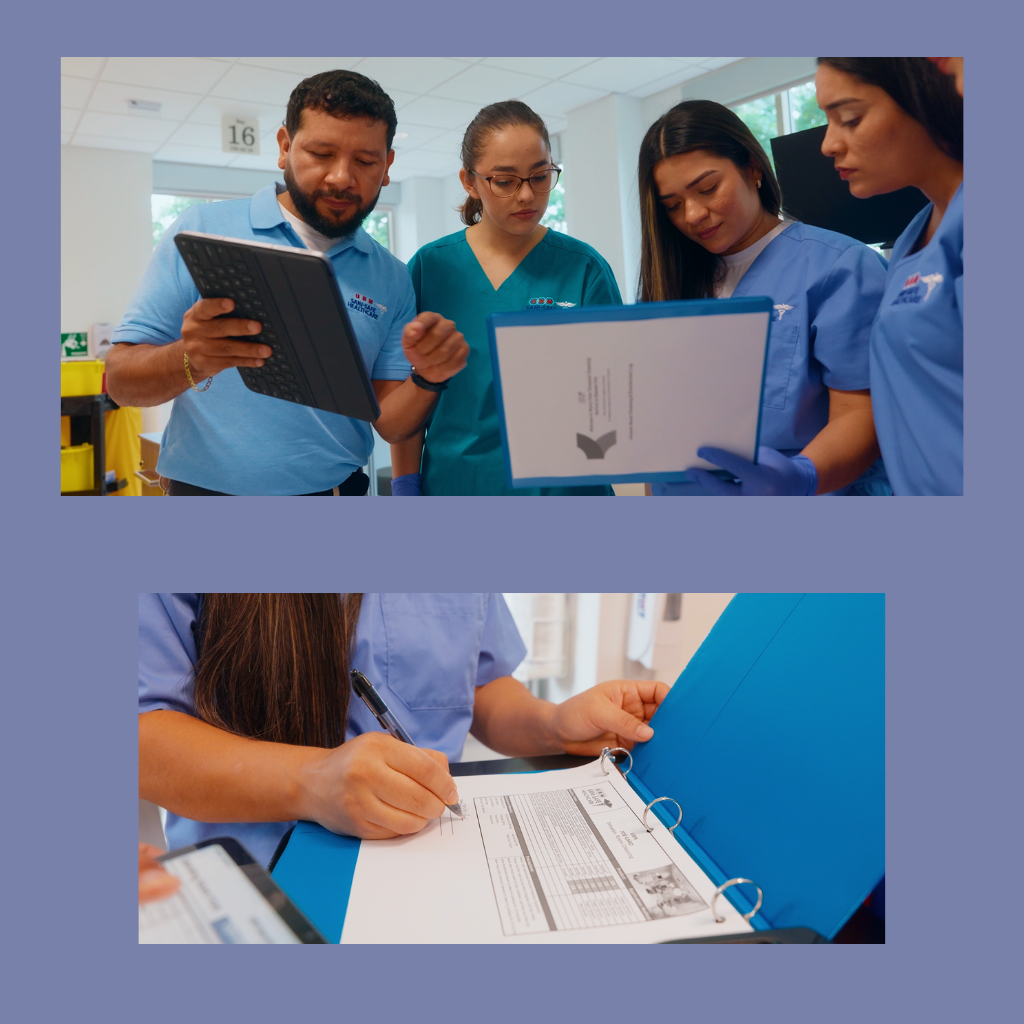
A properly structured program includes:
- Clear step-by-step procedures
- Staff trained in healthcare cleaning protocols
- Consistent nightly execution
- Correct chemical use and dwell times
- Documented processes and verification
When these are in place, inspections become predictable. Not stressful.
Final Thoughts
Terminal cleaning is not just about cleaning.
It’s about process, consistency, and proof.
Done correctly, it protects your patients, your staff, and your facility.
FAQs
AORN Terminal Cleaning Guidelines
- Do AORN guidelines require a specific cleaning checklist?
AORN does not mandate a single checklist format, but it does require a consistent, documented process that ensures all surfaces are properly cleaned and disinfected. - What is the most important part of AORN terminal cleaning guidelines?
Consistency in process. This includes following a defined cleaning sequence, using proper disinfectants, and ensuring all surfaces are addressed every time. - Are floors included in terminal cleaning requirements?
Yes. Floors are part of terminal cleaning and should be fully cleaned and disinfected, including areas under and around equipment.
Need Help Simplifying Your System?
If your current process feels inconsistent or unclear, it may be time to take a closer look.
Sani-SAFE works with surgery centers across Kansas City to create structured, compliant cleaning systems that reduce risk and eliminate guesswork.
Call 913-427-6100 or email [email protected]